- Dentiste Paris | 83, AVENUE FOCH. 75116 PARIS Facettes dentaires et Implants dentaires Paris

Dental correction · Paris 16th
Short teeth affect the visual balance of your smile and, depending on their cause, can compromise your bite. Microdontia, bruxism, acid erosion or excess gum tissue: each cause points to a different treatment. Dr Ari Elhyani, dental surgeon in Paris 16th, outlines the available options and the clinical criteria for choosing between them.
Written by Dr Ari Elhyani, dental surgeon,🇫🇷 Cet article est aussi disponible en français : Allonger une dent trop courte
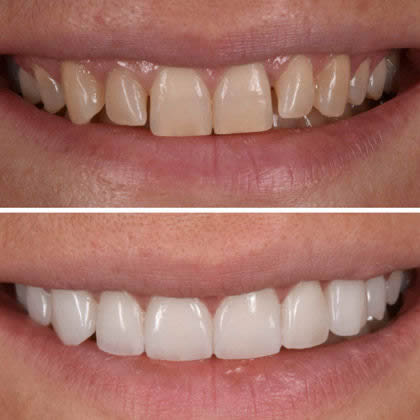
Dental correction
Tooth size depends on genetic, functional and environmental factors. An accurate aetiological diagnosis is essential: it directly determines the treatment choice.
Microdontia is a hereditary developmental anomaly characterised by abnormally small teeth. It can be generalised (all teeth), partial (a group, often the upper lateral incisors) or isolated (a single tooth, frequently peg-shaped).
Bruxism - nocturnal grinding or clenching, causes progressive mechanical wear of the enamel. According to the French Health Authority (HAS), it affects 8 to 31% of adults depending on diagnostic criteria. Teeth gradually lose height, sometimes by several millimetres over the years.

Erosion is the chemical dissolution of enamel by acids of extrinsic origin (sodas, fruit juices, energy drinks) or intrinsic origin (gastro-oesophageal reflux, repeated vomiting). It preferentially affects the palatal surfaces of the upper incisors and the occlusal surfaces of molars. Eliminating the cause is a prerequisite for any restoration.
An impact can fracture a tooth - most often a central incisor - leaving it shorter than its neighbours. The fracture may be supra- or sub-gingival, which determines the restoration technique. In the most severe cases, a dental implant may be considered if the tooth cannot be saved.
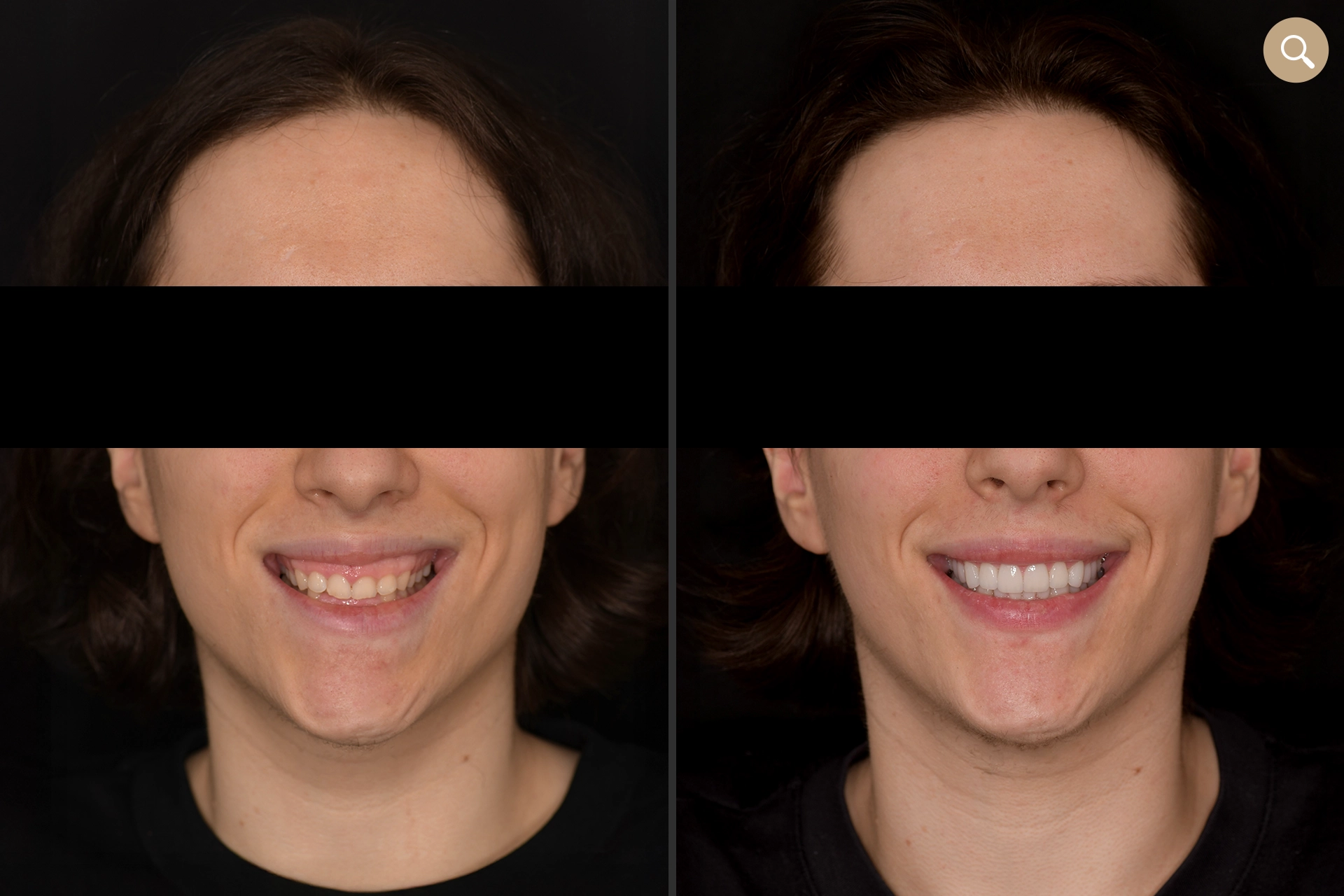
The tooth is not actually short: it is partially covered by excess gum tissue. Common in gummy smiles, this situation does not require prosthetic restoration if the underlying tooth structure is intact.
Available treatments
Treatment is determined by the aetiology, periodontal condition and the patient's aesthetic expectations. Options are not mutually exclusive and are frequently combined - periodontal surgery followed by veneers, for example.
Dental correction
When the clinical crown is masked by excess gum tissue, a surgical procedure exposes more of the tooth surface:
Dental correction
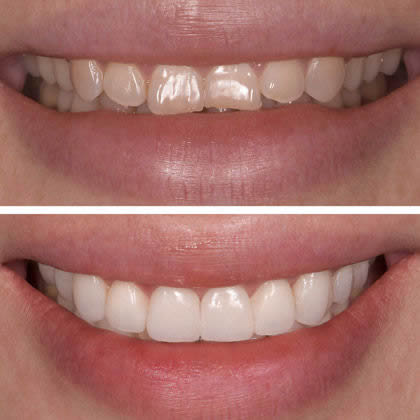
Thin ceramic shells (0.3 to 0.7 mm) bonded to the visible surface of teeth. The treatment of choice for morphologically short teeth. Materials: feldspathic ceramic, lithium disilicate (IPS e.max), ultra-translucent zirconia. Longevity: 10 to 20 years with rigorous oral hygiene.
Indicated when the residual crown structure is insufficient for a veneer (heavily abraded tooth, sub-gingival fracture, devitalised tooth).
When malposition or malocclusion is present, prior orthodontic treatment repositions the teeth and balances occlusal forces before prosthetic restoration.
In cases of bruxism, a custom night guard is systematically prescribed both before and after any restoration to prevent wear recurrence.
Decision guide
| Treatment | Main indication | Invasiveness | Sessions | Longevity |
|---|---|---|---|---|
| Ceramic veneers | Microdontia, stabilised wear, erosion | Low to moderate | 3 | 10-20 years |
| Crown lengthening | Excess gum, short clinical crown | Moderate | 1 + 3-6 months | Permanent |
| Gingivectomy | Soft tissue excess only | Low | 1 | Permanent |
| Ceramic crown | Insufficient structure, devitalised tooth | High | 2-3 | 15-25 years |
| Orthodontics | Malposition, malocclusion | Non-invasive | 12-24 months | Permanent |
| Identified cause | First-line treatment | Possible complement |
|---|---|---|
| Isolated microdontia | Dental veneers | - |
| Bruxism with wear | Splint + veneers or crowns | Orthodontics if malocclusion |
| Acid erosion | Remove cause + veneers | Crowns if severe loss |
| Excess gum tissue | Gingivectomy or crown lengthening | Veneers if morphological anomaly |
| Traumatic fracture | Crown lengthening + crown | Implant if tooth cannot be saved |
Our approach
At Elone Clinic (83 avenue Foch, Paris 16th), every patient referred for short teeth follows a structured care pathway:
FAQ
Three main approaches depending on the cause: ceramic veneers (least invasive), crown lengthening (surgical repositioning of gum and bone) or a dental crown (when residual structure is insufficient). The treatment plan is established after a clinical and radiographic assessment.
A hereditary developmental anomaly resulting in abnormally small teeth - generalised, partial or isolated. Upper lateral peg-shaped incisors are the most common isolated presentation. Treatment: ceramic veneers or crowns to restore harmonious proportions.
The procedure is performed under local anaesthesia and is painless during the appointment. Temporary sensitivity may occur for a few days after enamel preparation and resolves spontaneously.
Three steps: initial assessment, preparation and digital impression, then definitive bonding. The interval between preparation and placement is 2 to 3 weeks - the laboratory fabrication time.
Yes. Bruxism causes progressive attrition, gradually reducing tooth height. Before any restoration, a custom occlusal splint is systematically prescribed to protect the new restorations and prevent recurrence.
Gingivectomy removes excess gum tissue without touching the bone. Crown lengthening repositions both the gum and the marginal bone level where necessary. Crown lengthening is mandatory when gingivectomy alone would violate the biological width, or when a prosthetic restoration is planned.

Hello Doctor, my front teeth are very short: can this be corrected without heavy grinding?
Hello,
Yes, in most cases of morphologically short teeth, ultra-thin ceramic veneers allow us to correct the length with minimal preparation: 0.3 to 0.5 mm on the visible surface. The tooth structure is largely preserved. Everything begins with an aesthetic assessment including a digital simulation of the expected result.
Hi, my teeth have been worn down by grinding. Can they be lengthened?
Hello,
Yes, restoring teeth worn by bruxism is entirely achievable: veneers or crowns depending on the severity of wear. The essential prerequisite is a custom-made occlusal splint to protect the new restorations and stabilise the bite. We systematically integrate this step into the treatment plan.
Hello, my gums cover too much of my teeth and they look very short. Is surgery necessary?
Hello,
What you describe sounds like excess gum tissue, sometimes called a gummy smile. Depending on the extent of this excess and the position of the underlying bone, a gingivectomy or crown lengthening may be indicated. Both procedures are performed on an outpatient basis in a single appointment, revealing the true length of your teeth without affecting their structure.
Hello, how long does the whole veneer treatment take for short teeth?
Hello,
The protocol takes three to four weeks in total: an initial assessment, a preparation and digital impression appointment, then definitive bonding two to three weeks later. Provisional veneers are placed in the meantime so you always have an aesthetic result.